
Trump's fraud claims and the fight over election rules
Clip: 10/30/2026 | 13m 19sVideo has Closed Captions
Trump's fraud claims and the fight over election rules
Key midterm races are still razor-tight and controversy is swirling in Alaska of all places. The panel discusses election ethics and President Trump's claims of fraud.
Problems playing video? | Closed Captioning Feedback
Problems playing video? | Closed Captioning Feedback
Major funding for “Washington Week with The Atlantic” is provided by Consumer Cellular, Otsuka, Kaiser Permanente, the Yuen Foundation, and the Corporation for Public Broadcasting.
Trump's fraud claims and the fight over election rules
Clip: 10/30/2026 | 13m 19sVideo has Closed Captions
Key midterm races are still razor-tight and controversy is swirling in Alaska of all places. The panel discusses election ethics and President Trump's claims of fraud.
Problems playing video? | Closed Captioning Feedback
Where to Watch Washington Week with The Atlantic
Washington Week with The Atlantic is available to stream on pbs.org and the PBS app.
Buy Now
10 big stories Washington Week covered
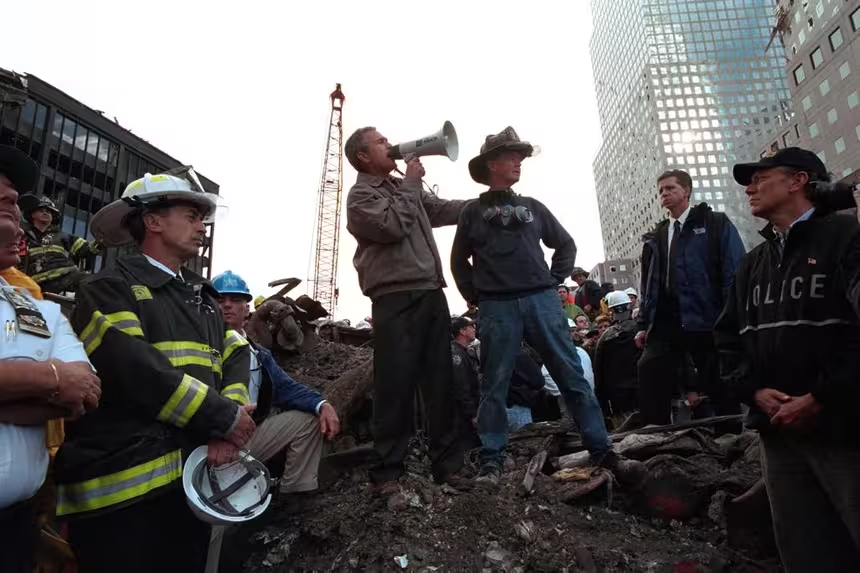
Washington Week came on the air February 23, 1967. In the 50 years that followed, we covered a lot of history-making events. Read up on 10 of the biggest stories Washington Week covered in its first 50 years.Providing Support for PBS.org
Learn Moreabout PBS online sponsorshipVivian Salama: I want to talk a little bit more about that race in Texas, but, first, Carrie, let's visit, revisit Alaska and what's been happening there.
Because, really, the Democrats at this point had to just lay low until Election Day, and yet now you have this controversy swirling around Democratic candidate Mary Pelt- Peltola her campaign, which is accused of ballot stacking, which is not illegal, but raises all kinds of ethical questions.
She has completely denied any knowledge of these alleged actions.
And so, you know, you have two Dan Sullivans on the ballot on Tuesday.
And that has launched already DOJ investigations and is causing all kinds of trouble.
So, how much of that is actually going to impact the turnout and the results in Alaska?
Carrie Dann, Managing Director, The Cook Political Report With Amy Walter: Well, I think it's worth remembering that Alaska could have, and maybe would have, been an electoral nightmare on an Earth Two without the two Dan Sullivans and without this accusation against Mary Peltola, or at least her campaign simply because of the way that Alaska counts its votes.
Because it is such an enormous state, they allow absentee ballots to be counted until 15 days after they're postmarked on Election Day.
So, if Alaska, which uses ranked choice voting, which is also a very confusing process that most Americans are not -- a lot of journalists are wrapping their heads around it.
Combine all of that, then combine it with the presence of the two Dan Sullivan, and the allegation that there was some chicanery here, put all that together and I think this accusation just adds to what was already going to be a very, very confusing result.
If control of the Senate comes down to Alaska, there's going to be a vacuum of information, and these -- the DOJ allegations here and potential, you know, whatever they want to charge.
And as you note, it's not a crime, but I do think that there could be a perfect storm of the allegation or the idea of impropriety which could bleed into other races that maybe are close elsewhere in the United States.
So, it's -- if this story had broken, let's say, a month ago, I would have thought that maybe it might have more impact on how voters are reacting.
Keep in mind that this is an electorate of about 30,000 voters, and more than 60,000 of them have already voted in this race.
So, there may be a lot of the decision-making that's already been hardened among voters.
I don't know if this story itself is going to move things, but it could have implications for the legitimacy or the idea of legitimacy around Alaska and around elections elsewhere in the country.
Susan Glasser, Staff Writer, The New Yorker: Well, I think that's the really important point to underscore here, right, is like Donald Trump already personally ordered the Justice Department to file a lawsuit claiming that they had some kind of a right to block certification in any result -- Vivian Salama: Before any of this, right.
Susan Glasser: Before -- A, before Peter's colleagues at the Times did this reporting about how the other Dan Sullivan got on the ballot.
But more importantly, let's be clear that you know, it's not up to the Justice Department.
How are they going to go and conduct an investigation?
Are they going to go to people's homes and say, like, well, you voted for this Dan Sullivan.
Did you mean to do that?
It's very hard to determine intent of a voter.
And, again, certification, to me, that was the sort of, you know, the whistle that went off when I saw that because Trump and his allies have been preparing for two years to undermine the legitimacy of this election.
Remember that Donald Trump has said this election was going to be rigged since before there were any candidates, before there were any votes.
He has mobilized his government to do everything possible to call into question Democratic victors.
He himself has said that he may not accept any outcome other than a Republican victory in both houses of Congress.
And so I think the question is, did Democrats, through their own, you know, sort of stumbling, hand Donald Trump an issue that he will use to more broadly call into question the legitimacy of the vote?
Peter Baker, Chief White House Correspondent, The New York Times: Yes.
I think it's the biggest thing.
You're going to hear him talk about this a lot, and he's going to say, See?
I was right.
They're trying to rig this election.
They're trying to cheat.
They're trying to steal.
It doesn't matter whether the DOJ succeeds or not.
It just simply muddies the water elsewhere, and the Democrats have completely played into his hands by doing this, and they didn't necessarily need to.
I mean, the August open primary in which anybody could vote for any candidate -- Asma Khalid, Co-Host Of The Global Story Podcast, BBC News: Which is all questions why Democrats -- Peter Baker: Yes.
Asma Khalid: -- would've thought this was great.
Yes, that's what I was going to say.
Peter Baker: Well, exactly.
Asma Khalid: The voters' top concern after affordability is corruption.
Peter Baker: Yes, it's corruption.
Asma Khalid: And I'm not saying that you can debate whether or not you think this is corrupt, right, but it feeds into the idea that this is not above board.
Peter Baker: It feeds into the idea that it's not -- everybody, a pox on all the houses.
But in August, Mary Peltola beat both Dan Sullivans combined, right?
She didn't need a second Dan Sullivan on the ballot to win in August, and now she might because, in other words, the problem is now if her -- if she wins, if her margin of victory is less than the second Dan Sullivan got, which probably won't happen because the ballot is actually very clear about which is the real Dan Sullivan.
I mean, the senator says incumbent senator, Republican.
Anyway, I just think that it adds to Trump's ammunition.
Vivian Salama: And, you know, this is not the only race that's been subject to some mudslinging last night.
You have the Ohio race where a gubernatorial ad by a Trump ally, Vivek Ramaswamy, against his opponent, using the estranged mother who he had, she hadn't seen.
I mean, you know, this has now been going on for several weeks.
That has been, you know, the focus of a lot of -- Asma Khalid: I mean, it's an ad that was even condemned by Republican lawmakers, and it's had bipartisan condemnation, I should say.
Vivian Salama: And Ramaswamy has since pulled the ad, but after intense condemnation, like you say, bipartisan.
You even have in Texas, you know, Susan was just talking about Texas, controversies surrounding Senate Republican Candidate Ken Paxton.
What are we seeing here in terms of the way that these races are being fought and the intense scrutiny of these candidates and the intense kind of use of some of these unconventional, let's say, approaches?
Asma Khalid: I mean, that's a good way of putting it, unconventional.
I mean, look, I can say for the Ohio one, because I think that one really when I -- when it came out, I think a lot of people questioned it.
Just for folks who may not have known that story entirely, you know, my understanding is that, yes, the gubernatorial candidate on the Democratic side has been estranged from her mother for years after allegations of a rape committed by her stepfather.
Vivian Salama: Right.
Asma Khalid: And so I mean, these were really a horrendous allegation, right, when she was 12 years old.
Vivian Salama: Although President Trump seemed okay with it.
You know, he openly spoke about the fact that, you know, it's just a mother saying that her daughter's a liar.
Peter Baker: He brought it up again on Wednesday.
Every other Republican speaking at that rally on Wednesday didn't say a word.
Asma Khalid: Yes.
Peter Baker: No other Republican mentioned it except for Trump, who doubles down.
Vivian Salama: And so everything goes, basically.
Susan Glasser: And J.D.
Vance.
Peter Baker: Everything goes.
Susan Glasser: Both of them have explicitly endorsed this.
So, you know, to give the impression that Republican office holders condemned it, well, no, the -- you know, the most important leaders of the party actually endorsed this ad with some -- Asma Khalid: Well, I think some Republicans, local Republicans.
Peter Baker: Yes.
Susan Glasser: Exactly.
Asma Khalid: I think that speaks more to me of what the Ohio electorate is thinking, right?
Because I do think there is this -- I don't know, maybe I feel this way being from the Midwest, even though some would debate Ohio's not always Midwest, is that there is a sort of like sensibility of what people want from their politics, and I think seeing someone like Mike DeWine come out and say that this was not, you know, -- I mean, that he is not on board with this.
But, again, I think this speaks to the fact of I don't understand people's campaign tactics in this moment.
It just felt like an extraordinarily bad judgment call that didn't need to be made, that wasn't necessarily likely to win you a lot of voters, I would say.
Carrie Dann: And could hurt the very competitive Senate race.
Asma Khalid: Yes.
Peter Baker: Yes.
Carrie Dann: It could have hurt Jon Husted.
And I would argue there may even be some bleeding over to other GOP candidates.
You saw Ashley Hinson, the Republican candidate in Iowa, come out very strongly against this ad and say and even imply that JD Vance's embrace of the ad was not what people were looking for from an empathetic leader.
And she's also in a very tough race.
And I think if you react -- reacting to that ad was something that maybe she felt like she had to do.
Peter Baker: It's so interesting how nationalized these races are, right?
These are all individual states, individual contests and candidates, and yet Talarico's name is used in a lot of different places, right?
El-Sayed's name is used in a lot of different places.
Now, because of Trump's admiration for his posterior, Jon Husted's name is used in a lot of places that wouldn't otherwise know who he was, and it's fascinating that we're nationalizing these races.
Vivian Salama: I mean, it's sort of the superpower behind some of these candidates who become these national figures.
I was at an event in Providence, Rhode Island.
They were talking about Talarico, you know?
Peter Baker: Exactly right.
Vivian Salama: I mean -- Susan Glasser: Well, the other factor here is, of course, the incredible amounts of money.
I mean, if you think about so what is this?
It's 2026.
We don't know the results yet, but we do know certain ways in which it's going to go down in history.
And I think the most important one is it's going already looking to be the most expensive election in American history, and that includes presidential elections, a lot of it powered by a single man.
The wealthiest man in the world is spending more than a quarter of a billion dollars from what's just disclosed, much of it on a single Senate race in the effort to get Ken Paxton elected in Texas.
I mean -- Vivian Salama: Do you think that's relevant specifically to this election, or do you think we're starting a new trend in spending?
Susan Glasser: Well, it's not a new trend.
You know, it goes back to the Supreme Court's decision predating Donald Trump and Citizens United.
That's really unleashed the floodgates of spending in a way that -- I mean, this doesn't happen in any other country in the world.
I think that's really important for people to understand.
This vast amount of money, the billionaires themselves in some ways who are spending the money are now becoming campaign issues.
But at the same time, it means that some of these campaign missteps or whatever can be amplified.
Part of the reason that we're so familiar with these candidates is because of the extraordinary sums that are being spent by interests we may not even really have a clear sense of why it is that they are spending so much money to get these folks elected.
Vivian Salama: Yes.
Carrie, we talked about early voting a little bit, you know, with specific races, but I want you to take us more nationally, the national picture.
How -- what do we know so far from early voting?
You know, what can you assess based on that where we might be by next week?
And also, how much has President Trump's rhetoric against early voting sort of fed into some of the patterns you're seeing?
Carrie Dann: Right.
I'm a little bit skeptical of taking too much -- extrapolating too much from early vote.
Because, for one, you can maybe say, okay, turnout in a very Republican area is up.
Do we know that there was persuasion?
Do we know who those people voted for?
No.
Do we know, you know, if the -- do we know if they voted in every single race?
There are going to be maybe Republicans who skip some of these races in some cases, or Democrats.
But I also think that it's important to note that the way that President Trump has talked about particularly mail voting and early voting and cast sort of a, a doubt about whether people's votes are going to be counted may be changing voter behavior, which makes me a little bit skeptical of comparing early vote now to previous years.
Democrats are -- I've seen polling where Democrats are as many as ten points more likely to say, oh, I want to vote in person or I want to vote on Election Day, because they're concerned that their mail vote may not be counted.
Republicans are less likely to, because of the president's rhetoric, I think want to vote by mail because he has condemned the idea of voting by mail and said it's illegitimate.
Republicans used to love mail-in voting.
Because the people who are most likely to mail in their votes are the older people and veterans.
Those are two very Republican groups, and a lot of Republican operatives that you talk to will roll their eyes saying, the president is actually hurting us.
It's shooting us in the foot by condemning the idea of mail-in voting, because that's the way a lot of our voters vote, including, by the way, the president, twice.
Peter Baker: Yes.
Vivian Salama: That's right.
We must not forget that.
Peter, take us -- for about 30 seconds, take us beyond Tuesday.
If Democrats win the House or Senate or both, what changes immediately for Trump and also for the way Congress operates in terms of investigations and otherwise?
Peter Baker: The big question is how big a wave it is if there's a wave, right?
It won't change some things, because the president hasn't been using Congress to govern.
He's been using executive power or assertions of executive power to govern.
So, it won't change that much in terms of legislation, and the Democrats aren't going to be able to pass things over his veto.
They will be able to use oversight.
They will be able to use the gavel to investigate subpoena power.
They will be able to use the spending bills to get some changes on policy.
The bigger question to me is what kind of message is this election sending?
How is it perceived?
The expectations game is now so important, right?
If Democrats put the expectations really high and they win but not quite as much as they have said, it may not be seen as a repudiation of Trump that they want.
This is what happened four years ago to Republicans.
They were going to have a big blue -- a big red wave.
They didn't get it.
They won the House, but not by much, and therefore everybody said, well, you really lost, even though you won.
So, the point is expectations, perceptions.
Is it seen as a repudiation of Trump, or does he have the argument to say, we didn't do as bad as everybody thought we were going to do?
Vivian Salama: Asma, briefly, this time next week, do we know who controls Congress?
Asma Khalid: The Senate?
Vivian Salama: The next Congress.
Asma Khalid: I mean, I will definitely, we'll know who controls the House, I think very quickly.
The Senate feels really uncertain to me, because I think, as Carrie said, a number of races feel like they are toss-ups.
And I think anybody who is providing additional certainty is just sort of talking off the cuff.
I mean, look, the thing I think in addition to, you know, one thing to watch real quick, will be the version of the Democratic Party that comes out of this.
And that to me is something really interesting, because we all know presidential primary begins, what, November 4th?
Peter Baker: Yes.
Vivian Salama: Whoever thought that it would all hinge on maybe Alaska, right?
We're going to have to leave it there.
Thanks to my guests for joining me, and thank you at home for watching.
Be sure to tune in to PBS Tuesday night, starting at 7:00 P.M.
Eastern, for special coverage election -- for special election night coverage.
I'm Vivian Salama.
Good night from Washington.
 New
Midterms test Trump’s political power
Video has Closed Captions
Midterms test Trump’s political power (10m 1s)
Providing Support for PBS.org
Learn Moreabout PBS online sponsorship New Episode
- News and Public Affairs

Top journalists deliver compelling original analysis of the hour's headlines.

- News and Public Affairs

FRONTLINE is investigative journalism that questions, explains and changes our world.
 New Episode
 New Episode
 New Episode
 New Episode
 New Episode

 New Episode
 New Episode

 New Episode


Support for PBS provided by:
Major funding for “Washington Week with The Atlantic” is provided by Consumer Cellular, Otsuka, Kaiser Permanente, the Yuen Foundation, and the Corporation for Public Broadcasting.